Pillows & sleep comfort
Wool or Shredded Latex? A Practical Guide to Pillow Fill
A pillow can seem like a small detail—until you spend the night flipping it, folding it, or waking up with a stiff neck. Wool and shredded latex offer two very different routes to comfort. Here’s how to compare their feel, support, temperature, and care needs, so you can choose based on what suits your sleep rather than on a promise that one fill is right for everyone.
Pillow shopping has a way of turning into a surprisingly personal project. One person wants a soft, airy cushion that practically disappears beneath the head. Another wants a loftier pillow that stays put and holds its shape. And for anyone who sleeps warm, comfort can depend as much on temperature and moisture as on softness.
Wool and shredded latex are both used in pillows, but they don’t feel or behave alike. Wool is a natural fiber fill valued for its spring, moisture management, and gentle cushioning. Shredded latex—small pieces of latex gathered inside a fabric cover—typically feels more buoyant and responsive. Either could be comfortable, depending on your preferred pillow height, sleep position, and feel.
The practical takeaway: focus less on which material sounds best and more on how you want a pillow to behave. Does it need to give easily when you move? Should it feel substantial under your head? Do you tend to wake warm, or are you looking for a pillow that can be adjusted? Those questions are a good place to start.
The quick comparison
Before getting into the details, here’s a simple overview. These are general characteristics, not guarantees: the construction, fill amount, cover, and care instructions of a particular pillow all matter.
- Wool: Usually feels springy and cushioning, with a natural-fiber texture. It can absorb moisture and may appeal to sleepers who prefer a less synthetic-feeling fill.
- Shredded latex: Often feels buoyant and responsive, with pieces that move and settle as you shift. Some models allow fill to be added or removed, but not all do.
- Support: Both can feel supportive, but “support” depends on the pillow’s height and firmness as well as your body and sleep posture.
- Care: Many pillows in either category aren’t designed for routine machine washing. Follow the specific care label rather than assuming the fill can be washed.
- Best next step: Consider your usual sleep position, the pillow height that feels comfortable, how warm you sleep, and what maintenance you’re willing to do.
What a wool pillow feels like
Wool has a soft, resilient character. In a pillow, it can provide a cushioned feel without being as slick or bouncy as some other fills. Depending on how much wool is used and how it is arranged, the pillow may feel lofty at first, then settle under the weight of the head. The overall experience varies from one construction to another, so material alone can’t tell you exactly how firm or high a pillow will feel.
Wool is also known for managing moisture. It can absorb some moisture without immediately feeling damp, a quality that may be welcome for people who notice heat or perspiration at night. That doesn’t mean a wool pillow guarantees cool sleep: room temperature, bedding, a pillow cover, and individual comfort all play a part. But for someone drawn to natural fibers and a less slick, more softly cushioned surface, wool may be worth considering.
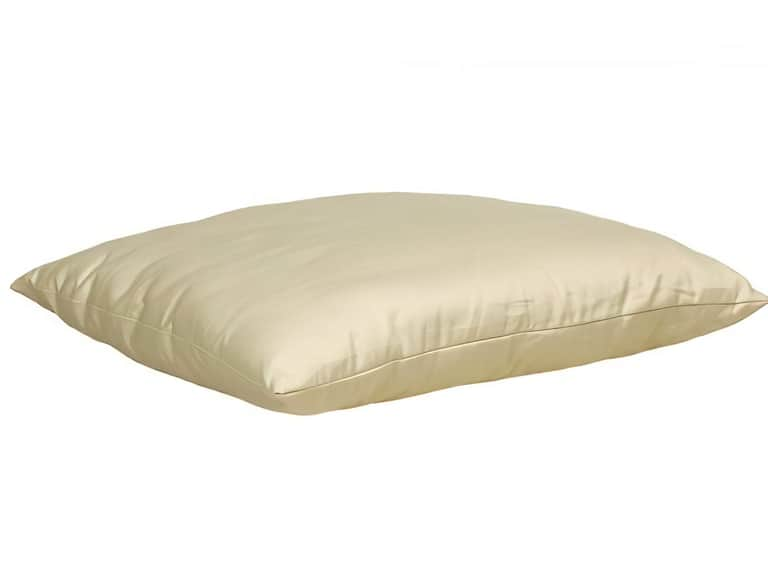
One example is the Sleep and Beyond MyMerino Organic Wool Pillow, described as having certified organic merino wool fill and an organic cotton cover. Its product information notes a five-year manufacturer warranty and recommends proper care for longevity. A cotton pillow protector can add a washable layer between the pillow and everyday skin oils or perspiration; check the maker’s instructions for the pillow itself before cleaning it.
Wool may not be the best match for someone who wants a sharply molded, firm pillow or a fill that can be reshaped into a very specific contour. Nor should anyone assume that all wool pillows are adjustable: some are made as a fixed-fill unit. If customization matters, check the product details carefully before choosing.
What shredded latex feels like
Shredded latex has a different personality. The small pieces tend to provide a buoyant, springy feel, and the fill can shift as you change position. Compared with a soft, yielding fiber fill, latex often pushes back more noticeably against the head. That responsive quality can be appealing if you like a pillow that feels lively rather than plush and flat.
Some shredded latex pillows have an adjustable design: a zipper lets the sleeper remove or add fill to change the pillow’s height and feel. This can be useful for people who haven’t yet found their preferred loft, or who want more control than a fixed-height pillow offers. But “shredded latex” does not automatically mean adjustable. Look for clear instructions about whether the fill can be removed, whether extra fill is included, and how to store any material you take out.
Latex pieces may move and settle under pressure, but the result isn’t necessarily a pillow that molds exactly to every head and neck shape. The amount of fill, the size of the pieces, the pillow cover, and the firmness of the latex all influence the feel. If possible, consider how easy returns or exchanges are before trying a pillow whose height or texture is unfamiliar.
People with a latex allergy should take particular care. Latex allergy is a real medical concern, and the word “natural” does not remove that risk. If you have a known or suspected allergy, consult a qualified health professional and check the manufacturer’s material information before using a latex pillow.
Support starts with height and alignment
In pillow conversations, “supportive” is often used as though it means the same thing for everyone. It doesn’t. A useful pillow helps you feel comfortable while keeping your head and neck in a position that doesn’t feel strained. The right height depends on your sleep posture, shoulder width, mattress feel, and personal preferences. A pillow that feels supportive to one sleeper may feel too high or too flat to another.
Side sleepers often need more space filled between the shoulder and head than back sleepers do, though the exact height varies. A pillow that is too low may leave the head dipping toward the mattress; one that is too high may tilt it in the opposite direction. Back sleepers commonly prefer a middle ground that cushions the head without pushing it sharply forward. Stomach sleepers often find a lower, softer pillow more comfortable because extra height can turn the neck to an uncomfortable angle.
These are starting points, not rules. Some people change positions during the night, and many mattresses allow the shoulder to sink by different amounts. If you sleep on your side, for instance, a soft mattress that lets your shoulder settle deeply may call for a different pillow height than a firmer surface. Consider the whole sleep setup rather than judging a pillow in isolation.
Wool and shredded latex can each provide support, but the fill label won’t settle the question. A wool pillow may feel substantial or soft depending on its fill and construction. A shredded latex pillow may feel adjustable or fixed, high or low, depending on its design. Whenever product details are available, look for finished pillow height, firmness guidance, and whether the fill can be adjusted.
Airflow, warmth, and the rest of the bed
Temperature comfort is not a contest in which one material always wins. The pillow cover, pillowcase, bedroom conditions, duvet, and a sleeper’s own temperature preferences all shape the experience. A breathable cotton cover and a lightweight pillowcase may make a bigger difference than a shopper expects, while a warm room or heavy bedding can leave someone uncomfortable regardless of fill.
Wool’s moisture-management qualities may appeal to people who want a dry-feeling surface. Shredded latex can have a more open, less compact structure than some solid pillow fills, but airflow depends on how the pieces are packed and what cover surrounds them. Neither material should be treated as a guaranteed remedy for overheating or night sweats. Persistent, disruptive sweating or sleep discomfort may have causes beyond bedding and is worth discussing with a healthcare professional.
Small adjustments can help clarify what’s happening. Try a lighter pillowcase, review the warmth of your duvet, and keep the bedroom comfortably cool if that suits you. Change one thing at a time for several nights rather than replacing the whole bed at once. That makes it easier to tell whether the pillow fill itself is affecting comfort.
Care matters more than the label suggests
A pillow may feel perfect in the store and still be the wrong choice if its care routine doesn’t fit your life. Some wool pillows are spot-clean only, while other products may have different instructions. Some latex pillows also require spot cleaning rather than machine washing. Never assume that a natural fill can be tossed into a washing machine—or that a removable cover means the pillow interior is washable.
Read the care label before buying. Check whether the pillow itself can be washed, whether only the cover can be cleaned, and what the manufacturer says about drying and exposure to heat or direct sunlight. A removable, washable protector can make everyday upkeep easier, especially if the pillow’s core must stay dry. Regularly laundering the pillowcase and protector also helps keep the sleep surface fresh.
Storage and handling matter, too. Follow the manufacturer’s guidance about airing the pillow and keeping it away from heat or moisture. If the pillow develops a persistent odor, visible damage, or a change in shape that affects comfort, consult the care instructions and consider whether it is time for a replacement. A pillow protector is useful, but it cannot make a worn-out pillow supportive again.
A simple way to choose between them
Instead of trying to crown a winner, use these questions to narrow the field. Your answers can point toward a likely fit, while still leaving room for personal preference.
- What feel do you enjoy? If you like a softly cushioned, springy natural fiber, wool may be appealing. If you prefer a more buoyant, responsive feel, shredded latex may be a better place to start.
- How much pillow height do you need? Think about your usual sleep position and how your head feels on your current pillow. If you want to experiment with loft, look specifically for an adjustable shredded latex model—or another pillow with a clearly adjustable design.
- Do you sleep warm? Consider the entire bed and your room, not just the fill. Wool’s moisture-management qualities or a breathable pillowcase may suit some sleepers, but no fill can promise a particular temperature experience.
- How much care are you willing to do? Compare the actual cleaning instructions. If you want to machine-wash a pillow, verify that the whole pillow—not just its cover—is approved for that.
- Do you have sensitivities or allergies? Review material disclosures and seek medical advice for a known allergy, especially to latex. Product claims such as “hypoallergenic” do not guarantee that an individual will have no reaction.
- Can you try it without being stuck with it? Check the return or exchange terms. A pillow’s feel is personal, and a brief trial at home may reveal more than a description can.
Common mistakes to avoid
One common misstep is choosing a pillow based on sleep position alone. Position is useful, but it’s only one part of the picture. Shoulder width, mattress firmness, preferred loft, and whether you move around all night also matter. Use position as a guide, then pay attention to how your own body responds.
Another is treating fill material as a guarantee of comfort or health. Wool and latex have distinct properties, but neither can promise better sleep, prevent allergies, or correct a medical problem. Product descriptions can help explain materials and care, but the right pillow still depends on the person using it.
Finally, don’t overlook the cover. A soft, breathable cover can change the way a pillow feels against the face, while a thick or tightly woven case may alter that first impression. A pillow protector may also add a little structure or warmth. If you’re testing a new pillow, use the kind of pillowcase and protector you plan to keep using so your trial is realistic.
The bottom line
Wool and shredded latex can both make sense in a healthy bedroom, but they suit different comfort preferences. Wool offers a springy, softly cushioned feel and is often chosen for its natural-fiber and moisture-management qualities. Shredded latex is typically more buoyant and responsive, and some designs let sleepers adjust the amount of fill. The details of the individual pillow matter as much as the material name.
If you like a natural-fiber feel and don’t need to reshape your pillow often, wool could be a comfortable direction to explore. If you enjoy a livelier, more resilient feel—or want to adjust the loft—consider a shredded latex design, checking that it is genuinely adjustable if that feature matters to you. In either case, match the height to your sleep position and comfort, review the care instructions, and give yourself time to notice how the pillow feels over several nights.
The best pillow isn’t the one with the most impressive-sounding fill. It’s the one that feels comfortable, suits your routine, and supports the way you actually sleep.
Frequently asked questions
Is wool or shredded latex better for side sleepers?
Neither is automatically better. Side sleepers often need enough pillow height to feel comfortable between the shoulder and head, but the right loft depends on body shape, mattress feel, and personal preference. Compare the actual height and firmness of each pillow rather than choosing by fill alone.
Can a shredded latex pillow be adjusted?
Some can, but not all. Check whether the pillow has an opening for removing or adding fill and whether the manufacturer provides clear adjustment guidance. The word “shredded” describes the form of the fill; it does not guarantee that the pillow is adjustable.
Are wool pillows cool?
Wool is often valued for managing moisture, and some sleepers find it comfortable across changing temperatures. Still, the pillow cover, pillowcase, bedroom, bedding, and individual preferences all influence warmth. No material can guarantee that every sleeper will feel cool.
How should I clean a wool or latex pillow?
Follow the care label for the exact pillow. Instructions vary, and many pillows are not designed for regular machine washing. A washable pillow protector can help keep the pillow clean, but it does not replace the manufacturer’s directions for the inner fill.
What if I have a latex allergy?
If you have a known or suspected latex allergy, don’t rely on general product descriptions to judge whether a pillow is safe for you. Check the material information and ask a qualified healthcare professional for guidance before using a latex product.